e-Governance in Afghanistan

Electronic governance or e-governance is the application of information and communication technology (ICT) for delivering government services, exchange of information, communication transactions, integration of various stand-alone systems and services between government-to-citizen (G2C), government-to-business (G2B), government-to-government (G2G), government-to-employees (G2E) as well as back office processes and interactions within the entire government framework. Through e-governance, government services will be made available to citizens in a convenient, efficient and transparent manner. The three main target groups that can be distinguished in governance concepts are government, citizens and businesses/interest groups. In e-governance there are no distinct boundaries. Generally four basic models are available – government-to-citizen (customer), government-to-employees, government-to-government and government-to-business. [1]

Fortunately in recent years, e-Governance implementation is considered well-known solution for improving efficiency, transparency and provision of simplified public services within Afghanistan government authorities thus focusing on initialization of a number of projects for simplification and digitization of public services, therefore citizens may not require to wait in long queues and also decreasing the frequency of public offices visits for service applicants.

The Afghanistan Government long term e-Government vision is Quality Public Services delivered Equitably by a Trusted Government to an Empowered Citizenry. [2]

Thus to achieve this vision we require strategic approach or to simply put e-governance cannot be implemented through establishment of stand-alone systems, infrastructures or implementation of isolated projects and expect success. Let’s break down our e-Governance vision and discuss:

Quality Public Services There are two important stakeholders to be considered: 1. Service provider 2. Service recipient; quality of public service means providing and receiving the services comfortably and efficiently but unfortunately in most of e-governance projects the technical parts are considered (which is good) but mentioned two stakeholders are not considered as required before and during project implementation and in the end when project is completed above two stakeholders are expected to like, adopt and utilize the project and it’s not a surprise that they resist because it’s not what they want or need. If we want to create quality public services, it’s necessary to understand the need, inspiration and suggestions from main stakeholders while designing and implementing pubic services.
delivered Equitably Equitable delivery of public services means to provide services to all citizens of Afghanistan across the country in rural and urban areas in a fair and justified manner, this part is actually not considered in most of the public services design that how all people from across the country can be enabled enough to access the public services equally as people living in center Kabul. This issue and also citizens empowerment issue can be solved not by distributing laptops or tablets to citizens but through long term plans and I would shortly refer to Universal Design of Web by World Wide Web Consortium (W3C).
by a Trusted Government Trusted government means citizens feel safe sharing personal information and government ability to process and also identify false information while submitted, as in other part of the world most government authorities are trying to identify its citizens easily and process false information real time but Afghanistan has even no visible strategy or plan to ensure the security of digital public information or identification of false data, and there are no plans yet to integrate different government systems securely as it’s needed to provide online services, other world have found solutions like x-road, single-sign in or mobile ID as no citizen need to submit their date of birth, father name… each and single time and access almost all public services from a single point, however in Afghanistan in single public office from one table to another you need to fill forms, identify and verify yourself repeatedly.
to an Empowered Citizenry Government vision is to provide quality public services equitably to an empowered citizen, and empowered citizens means that in first step citizens has easy and affordable access to technological tools and internet (to access online services provided by government), then the information provided should be understandable and accessible by all citizens (including illiterate, disabled…), and be able to  provide requested information easily (avoiding the need to provide same information repeatedly) and confirm the receipt of the service, if citizens are not empowered enough or in other words providing online public services but not considering citizens empowerment to use these online public services does not make sense.

To conclude, from above analysis it’s clarified that e-governance is not simply about developing isolated systems and applications or establishing technological centers but e-governance implementation require a clear national vision and set of goals to be achieved through strategic and regulative steps that aims to pave path for fundamental changes in public organizations and implementation of e-governance by enabling and empowering all involved stakeholders.

References

[1] Wikipedia, “E-Governance,” [Online]. Available: https://en.wikipedia.org/wiki/E-governance.
[2] MCIT, “MCIT’s-Achievements & Activities Report 2002-2015,” 2010. [Online]. Available: http://mcit.gov.af/Content/files/EGOV%20AF%20-%20D9%20-%20Electronic%20Government%20%20Strategy%20in%20Afghanistan.pdf.

USA Election, a slight reflection of Election in Afghanistan?

Last year 2019, in Afghanistan presidential election there were two top candidates; Mr. Abdullah Abdullah a war lord (who’s single suit costs more than my annual salary as junior researcher in Taltech, not because he is a tech savvy, lawyer or has business in real state or oil but simply maintaining his reputation as a successful war lord). Another candidate Mr. Ashraf Ghani is world known economist, lecturer and also he was dean of Kabul University when I was studying in Faculty of Science (once he invited all students in a hall. When I arrived with my friends, he was shouting on a student and we unintentionally smiled at that poor student. In the crowd of hundreds of students, he noticed and started shouting at us, everyone was looking back at us and we also looked back as well but there was no one behind us, so we run away but we didn’t stopped smiling 🙂 ).

On 9 March 2020 Mr. Ashraf Ghani took oath of Afghan president after a long delay of announcing the presidential election results and likewise his rival Mr. Abudllah Abdullah took oath as self-claimed Afghan president in presidential palace[1]. This happens in a country which is torn by civil wars for decades. People risking their life and limb to vote. More than 50% population living under poverty line and sleeping hungry every night. Young promising students, experts and youth are killed every day by terrorists across the country. Bomb blast survivors like Shamsia Alizada still fighting against the problems of life and society, and tops University entry exam (kankor 2020) but obviously she is not praised internationally or eligible for so called “Noble Peace Prize”, and we have many real heroes like her.

To provide short review of my master thesis research, technical glitches in 2019 presidential election as reported has made many people not being able to vote and left disappointed [5][6]. According to presidential election commission timeline the polling day was held on 28, Sep, 2019 and final presidential results should have been announced on 7, Nov, 2019 [3], but till date (14, Jan, 2019) only presidential election preliminary results were announced [1]. One of possible reasons for delay according to independent election commission management is “So far, more than 22,000 digital results forms and 25,000 physical results forms have move in to the server and in tally center. The biometrics information of 1million and 700 thousand voters also have been transferred in the system which includes Photo, face, Tazkira, fingerprints of thumbs and other specifications. Less than 4,000 digital results forms will be transferring soon to the server, and the phase of validation and separation of valid and invalid votes will be commencing. ” [2]

Polling and counting procedures for 2019 presidential elections guideline issued by independent election commission, provides detail about biometric system. Which is not alternative but additional layer of identification and verification to manual procedures of identification and verification used jointly to conduct several methods of voter identity and registration confirmation prior to voting at the same time [4], to avoid fraud.

The digital solution developed to facilitate presidential election through independent election commission was not able to achieve citizen’s satisfaction, and another possible reason for people’s disappointment and distance from government.

The digital solutions in public sector are viable and successful if it has citizen-centric and innovative approach for solving wicked problems that exists in governance of our government. We do not need to be deeply and emotionally connected with our current legacy systems. For example, independent election commission requires biometric data and purpose is to identify a voter, voter eligibility and voter registration detail. At the same time IEC also requires voter to show original ID card (tazkira), and attached with IEC voter registration certificate (It seem like abusing the use of technology or technology itself and extra administrative workload). Even though some voters with ID card, attached with IEC voter registration certificate were still not eligible for voting when their data was not shown in system after processing their biometric data, observers of election process approved it as technical glitches in election system.

The main purpose of digital transformation and innovation in public sector is never about coming up with digital solutions right away. It’s about coming up with innovative and viable solutions considering the existing context, and also bringing required changes in governance that will enable government to adopt such digital solutions in national scale.  

References:

1.         IEC. 2019 Presidential Elections. 2019. Retrieved January 14, 2020 from http://www.iec.org.af/results/en/home

2.         IEC. Transferring of biometrics voters data to the system. 2019. Retrieved January 14, 2020 from http://www.iec.org.af/en/media-gallery/news/1011-bvv-info-20191014

3.         IEC. 2019. Presidential Election 28 sep 2019. Retrieved from http://www.iec.org.af/pdf/timeline-2019-en.pdf

4.         IEC. 2019. Independent Election Commission Polling & Counting Procedures for the 2019 Presidential Elections Unofficial translation. Retrieved January 14, 2020 from http://www.iec.org.af/pdf/legalframework/procedure-1398/en/1398-60.pdf

5.         Ali M Latifi. 2020. Low turnout , technical glitches mark Afghan presidential election. 1–5. Retrieved from https://www.aljazeera.com/news/2019/09/turnout-technical-glitches-mark-afghan-presidential-election-190928134625155.html

6.         William Malley. Afghanistan’s 2019 Election (15): Administrative and technical problems in Kabul city | Afghanistan Analysts Network. Retrieved January 6, 2020 from https://www.afghanistan-analysts.org/afghanistans-2019-election-15-administrative-and-technical-problems-in-kabul-city/


[1] https://www.nytimes.com/2020/03/09/world/asia/afghanistan-president-inauguration-ghani-abdullah-.html

Afghanistan Passport/Visa Issuing System

The current Afghanistan Passport/Visa Issuing System has been developed in year 2006 and implemented in year 2010, till date [2020] it has not been fully upgraded. This system is used by Central Passport Department of Ministry of Interior Affairs, Ministry of Foreign Affairs and some other consulates and embassies to issue passports.

The system was simple and created in purpose to accurately store and process data that’s provided by applicant while submitting application for acquiring a passport, and print validated and accurate data on passport. The system is combination of manual and digital process; submission of application, payment of fees, following of application process and receiving passport is all manual for applicants (service recipients). In the background accurate registration and record of data, process and printing passport is digital for employees (service providers), and also strange enough at the same time the same process is repeated in analog method as well (extra administrative workload).

The system was created in response to the problems of decade ago, hence rising demand of applicants acquiring passports within country and across the world, fraud, limitations of human resources and system capacity has become a great challenge. I remember having meetings with CPD, I experienced for the first time a government department was accepting all available challenges and genuinely believed in digital transformation as a solution for achieving their organization strategic goals. But at the same time I remember in a meeting we were having interesting discussion with another government entity that “who started planning about upgrading the APIS system first” (challenges of parallel government entities with similar mandates). 

In order to upgrade APIS/AVIS system fundamental changes in organization structure, regulation, administration process, technical and human resources are required. It seems that CPD and president office agreed with existence of available technical challenges (which is in the point to creating enabling situation for national threat and insecurity), and accepted that fundamental changes are required so they completely relied on IT experts who in the end offered solution that was marketed as cost effective and sustainable at that time (2017). It has been proven through our costly experiences that the most cost effective digital solution or in-house development is not always efficient and sustainable. We should always prioritize security (national and digital), efficiency, reliability and sustainability of digital solutions specially while working on projects that have impact on national security of our country.

To conclude in simple words, the digital transformation of Afghanistan has become a political agenda for quick wins which results in seeking for short-cuts to claim it as success point checked into the bucket list.

Everyone is talking about digital transformation, human-centered service design, proactive services, and simplified services and so on… but in reality it has become just empty slogans with no actual actions and no one bothers about the fact that for example it doesn’t require new digital laws stapled over current laws (I mean there is one law, it’s not like for digital solutions we must have different laws). It requires national vision and strategy, it requires change in governance.

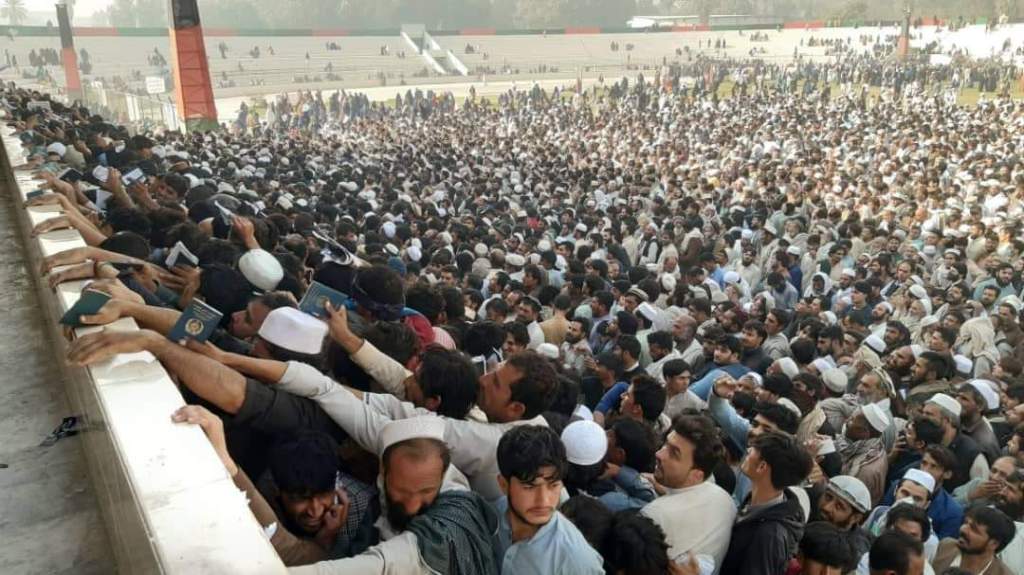
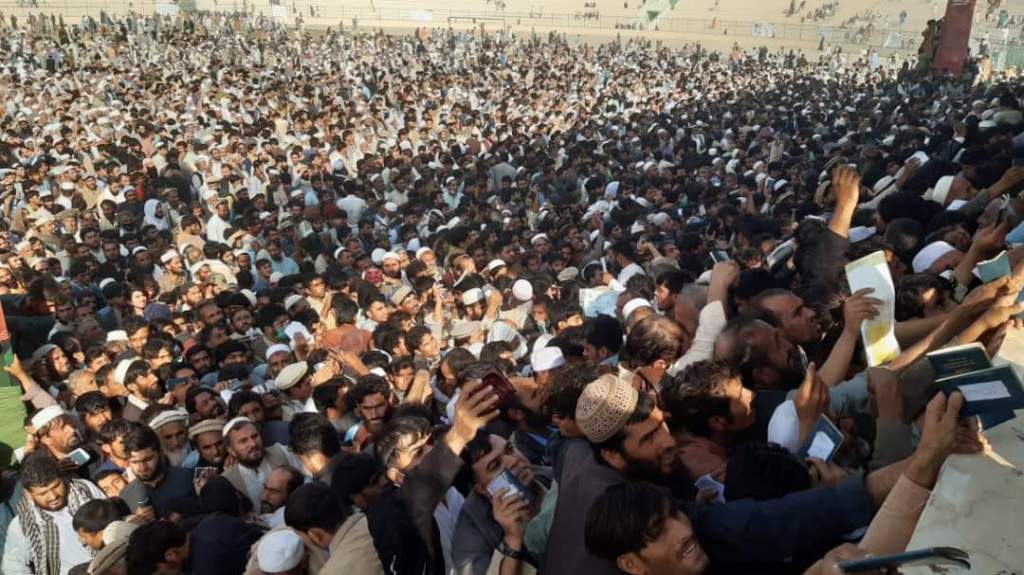
Last week we lost 12 lives and several injured (mostly women) while receiving visa on their passport in a football field in Jalalbad. I have no words how to explain the chaos but as it can be seen in pictures, from my experience it’s the most barbaric public service provision experience, ever!

This incident should give us a wakeup call that in IT field there is no place for politics or political gains, as experienced it will always result in failure and disaster. We need to focus and have holistic approach on HOW we can digitally transform our government to improve government efficiency, accountability and service delivery and avoid extra administrative workload that costs millions per month, and possibly death of our people.

[Note: Photos are taken from ToloNews]

MCIT Creating, Empowering and Leading ICT Sector

If you search for “ICT sector in Afghanistan” you may get many reports and analysis of ICT sector development, improvement and empowerment in Afghanistan, but it all looks like fog because later in reality nothing exists.

1 > MCIT Creating ICT Sector

It’s important to agree that ICT sector cannot be created by wealthy businessmen investing in ICT sector having no ambition and idea of this sector but just trying their luck to get wealthier. Also ICT sector cannot be created by short term and temporary projects funded by donors. In other words ICT sector can never be built by money but by brilliant minds with ambitions. For example Bill Gates and Mark Zuckerberg founders of Microsoft and Facebook, they started it from their rooms and the only thing they had were skills, knowledge and ambition.

MCIT need to focus on young generation, creating collaboration with national and international academic institutions to equip graduates with skills and knowledge that is required in ICT sector market. Working with government organizations to facilitate and make it easier and cheaper for talented graduates to create startups (here I don’t mean simplification of services or procedures). Facilitation and availability of technological tools which might enable graduates to create startups easily.

2 > MCIT Empowering ICT Sector

Frankly speaking I was one of those who was no one’s cousin or had no ethnic affiliation. So mostly I would always work hard and honestly but I would be ignored if there were good opportunities. I know I might not be the only one but I trust MCIT can empower ICT sector while being neutral who to be empowered. The platforms and opportunities should be free and easily available for anyone who has the required skills, knowledge and ambition.

MCIT can empower ICT sector by creating platforms where experts can collaborate and network with national and international firms for job opportunities, exchanging experiences, and acquiring new skills.  Facilitating opportunities to create startups just by having laptop, access to internet, knowledge and ambition.

3> MCIT Leading ICT Sector

Leading the ICT sector means having a clear vision and strategic approach to improve ICT sector in Afghanistan. Having important role in creating platforms, opportunities and collaboration in ICT sector. In Afghanistan much more has to be done to be able to compete with ICT sectors of even our neighbor countries, and having strategic approach can help to wisely utilize our available resources and avoid wasting time on unpractical approaches, it’s all about which approach should be considered in the right time. Whenever we try to adopt other countries practices we should research it’s history and phases they have completed before considering this exact practice.

Leading this sector means understanding and analyzing our local problems, researching international practices and approaches for resolving the same problems and come up with our own local solution.

ICT is a wide field and there are many opportunities available in this sector which is not even considered by Afghanistan government till date. ICT is not only strong backbone for e-Governance implementation but it’s crosscutting many other sectors and can be used as enabler and empowering tool for development and improvement of other sectors as well and for this to happen we need strong ICT sector. But unfortunately focus is not on empowering and leading ICT sector itself but elsewhere.

“ICT is never about digitization of procedures and services, and has nothing to do with Electronic Governance. But Electronic Governance need strong ICT sector to implement Electronic Governance. In other words ICT is about creating, empowering and leading Information and Communications Technologies.”

Possible Future of e-Governance in Afghanistan

“First let’s agree there is no single successful formula for e-governance success. It’s an art to vision the whole picture and ability to create it. And there are no shortcuts but to create ground for your each step”

Afghanistan government started its first initiatives toward e-governance implementation in year 2003 by producing the very first Information and Communications Technologies (ICT) Policy which mainly focuses on aligning ICT sector to achieve e-Governance goals. In result establishing a small e-Governance Unit in year 2005 currently active as e-Governance Directorate. Back then government was newly established therefore there was lack of local experts with relevant experience. Hence everything was relied upon foreign experts which costed a lot so there was always pressure of lack of budget to keep them and pressure of time on experts that prevented them to collect and analyze detail information. In other words to fully understand the Afghanistan context, identify approaches that might create a stable ground to move toward implementation of e-governance. But sometimes it looks like we ended up implementing e-governance projects without creating “stable” ground for it first.

Initially MCIT had several achievements for creating necessary organizational changes, strategic and technical documents, IT infrastructure of government organizations, enabling platforms and also several other ministries created successful systems and applications. But later these successful initiatives soon became isolated islands. Our experiences through this period of time taught us that these initiatives are not successful e-governance projects. We moved to the “E” part quite soon without focusing on “governance”.

Unfortunately, after years of efforts the challenges and obstacles are same or even increased. And after utilizing international human resources and millions of dollars Afghanistan government is not able to provide a single e-service till date. That e-service where a customer don’t need to: wait for hours and stand in long queues to write an application, get more than ten signatures on single page, follow up the same application for next few weeks or months, remind and request the employee every time to process your work, be unsure what is going on with your application, follow up the single application in several government organizations that is in different locations, be treated unfairly, or be upset and many more.

“E-governance goal is not creating IT systems and infrastructure, but use IT as a tool for providing public services to customers. Unfortunately in Afghanistan “e-governance term” is used as a tool for conceptualizing and creating IT projects.”                                                                                                 

Let’s dream the Possible Future of e-Governance in Afghanistan!

The president and his office supports MCIT to focus on ICT sector and expand it, eliminates parallel e-governance bodies and authorities, establishes e-governance authority and closely supervises and supports the authority.

The e-governance authority main aim is to align and empower IT and e-Governance strategic goals and relevant resources of all government organizations in national level. Create awareness and mentality in policy level and among people, and focus on creating customer oriented public services. For this purpose government need strong ICT sector that might be created, empowered and lead by MCIT.

“E-Governance is more about enabling the government to use IT as a tool for providing public e-services. If the government is not enabled first, it might not be ready to use IT as a tool; and also enabling people to use e-services if people are not enabled, it might not be e-gov service at all!”

E-Governance Authority Strategic Plan Overview:

Phase 1: Document current public services provision experience and administrative procedures.
Detail:
The government service provision starts exactly when the customer (people) start thinking about acquiring the public service, it’s not when they physically contact the government agency or submit the filled application.
Possible Challenges:
The government current public services provision experience, administrative procedures and challenges are not documented or not documented accurately. No collaboration and coordination within government agencies for improving public services provision.

Phase 2: Simplify public services provision.
Detail:
The simplification of public services might not mean utilization of IT but this phase is part of the plan to prepare and enable government to use IT as a tool in future, prioritize and initiate necessary changes to government organizational structures, resources, legal framework and so on to move toward customer oriented public services provision.
Possible Challenges:
Lack of government authorities and policymaker’s awareness and interest for the importance of customer oriented public service provision, most organization don’t know their role and responsibility to contribute in this movement thus feeling lack of ownership and creating resistance by not changing, lack of capable human resources.

Phase 3: re-simplify and bring public services provision under single roof.
Detail:
In this phase we know our challenges and obstacles in public services simplification thus we need to create solutions and further finalize the simplification process keeping in mind to bring public services under single roof, the single roof management might not simplify or provide public services but manage and provide facilitation to government organizations that are providing public services under single roof and improve customer experience inside the single roof. The government main aim for establishing single roof is low cost and customer oriented public services.
Possible Challenges:
Misconception of government organization regarding public services simplification and single roof, lack of required resources, expertise and accountability.

Phase 4: Creating public e-services.
Detail:
In this stage government already have required legal framework, IT infrastructure, enabling platforms, standards and technical resources to create, manage and maintain sustainable public e-services, the government internal administrative procedures, reporting and financial system is digitized, the private ICT sector is mature, reliable and capable enough to have sustainable partnership with government organizations to create public e-services, people have awareness and access to low cost internet and technological tools across the country and can easily access public services through different channels online, mobile or single roof…
Possible Challenges:
Lack of support and interest from authorities and policymakers to digitize public services, lack of required legal framework and IT resources in government organization, lack of literacy and equal access to low cost internet and technological tools to acquire public services.

Phase 5: Maintenance and further simplification of e-services.
Detail:
Our experiences through this journey might enable us to identify further challenges, obstacles and mistakes which we might need to solve as continuous effort. The main aim is to enable government organizations to identify their challenges in service provision, provide solutions to these challenges in a collective manner, neither challenges nor solutions can be owned by single entity.
Possible Challenges:
Lack of defined roles and responsibilities among government organizations, budget to maintain sustainable IT resources and qualified IT experts, and capable ICT private sector.

“Any problem that prevents the government from implementing e-governance is the main problem, and unfortunately we can’t ignore these problems.”

Me and My Friend… in the bank!

Based on true event, happened somewhere in July, 2018.

My friend lives abroad and once in a while she come to Kabul to visit family members, during her last visit few years ago I helped her open saving account in a bank and this time we went to deposit some cash but to our surprise we cannot do it because the account is closed, the clarification provided in one sentence was “if you don’t deposit or withdraw money for six months so your account is automatically closed” my friend replied “but I have been receiving rent in this account regularly and I checked it online” and they continued “yes but if you don’t withdraw any cash in six months the account is closed immediately for security reasons” and then I said “ but you didn’t told us about this while we were opening the account and we mentioned that my friend is living abroad and she is opening the account to receive rent…” we didn’t came up with conclusion in our favor as it’s bank policy to close account (I didn’t found that policy in bank website or anywhere, if that policy is for customers so banks must make sure customer have access to it), with quite cold attitude we were directed to go to the branch where we opened the account to re-reopen the same account… me and my friend were quite disappointed and frustrated that we have to go through the whole process again so we went straight to that branch and again to our surprise we forgot to bring my friend ID and only had the bank card… my friend had to re-identify herself to the bank she already did few years ago, amazing! Again the same cold attitude and not providing enough information so we would make sure not to do any mistake again! Like it’s our fault that we don’t know the account is closed, where is accountability here?

Next day we prayed everything goes well, I personally can’t get the cold attitude and lack of accountability in these banks… But again to our surprise this day the attitude was a bit nicer and everyone was smiling, they were trying to help us complete our work sooner, the process was still frustrating and they recommended to create a master card so my friend will be able to deposit or withdraw cash abroad and make sure the account stays open, we left the bank with a relief.

I am always disappointed with the lack of efficiency and accountability in private sectors while providing services, not having customer experience and happiness as priority. I am always disappointed with the government giving away permission to private sectors that do not have any known or well written customer care policy, I know private sector is all about business but we as customers are the reason these businesses run so we should be treated as Very Important Persons, and it’s government responsibility to make sure we are given our right, it’s government responsibility to make sure we are given services properly, relevant information and conditions should not be a surprise but included in the customer contract and read out loudly to each customer while receiving the service and the customer must have the authority to confirm the completion of a service to the service provider… (But how can customer be enabled enough to end a service…?)

To make it happen government need to bring changes in work permission related regulations and policies, and it should be focused on customer care and satisfaction, accountability, transparency, standards… the government must have systems to measure and analyze customer experiences and create policies and regulations to act upon it, I wish I have a government where businesses will have the permission to work only if customers are happy and satisfied with the services provided.


Me in Amsterdam Airport

Based on true event, happened somewhere in September, 2018.Amsterdam Airport

I was waiting for my connecting flight from Amsterdam Airport to Portugal, in between I went to toilet and to my surprise I saw the little smiley face feedback machines everywhere in the toilet room and on tissue paper machines, I couldn’t stop evaluating one of the feedback machine, I was clicking each button again and again, checking the time and frequency of clicks… as I was leaving I saw security officer was entering to toilet and went toward the exact machine I was disturbing just two minutes ago, I was so surprised with the whole situation not only feedback mechanism but speed and accuracy of responsiveness for unexpected event or problem.

When I was returning back to my terminal, I was just thinking if my country will come to this level of accountability and responsiveness while providing services. The people are the service recipients and real service evaluators, they can tell service providers if they are providing services rightfully or not, the only thing service providers need to do is how to get useful and relevant information from service recipients that can help to improve the service, it can happen when service providers create good feedback mechanisms and be responsive and accountable, put the comfort of people (service recipients) as priority while designing services, update and improve its resources accordingly, note down and discuss unusual cases happening during the service for future improvement.

As long as I have lived in my country I always have questions, uncertainty, disappointment, frustration and distrust while receiving a public service but to my knowledge till date there is no commonly and easily accessible complain or feedback mechanism, or maybe it doesn’t exist at all, it feels like government do not care if I have a problem during a service or if I am happy in the end of service or not because government is not asking me about it so how can government claim they have designed a good service; there is no holistic approach and intention to understand people’s satisfaction and feeling while leaving a service and the reason behind it, and wonders how can people be happy from government, it’s simple, ask them!

It’s mention able that gathering feedback and complain is not enough if it’s not utilized purposefully, there should be possibilities and intention to use this information for improvement of services otherwise repeating the same questions and having no improvement can also have negative impact on people’s perception about government. MAYBE government can first do a research HOW and WHY people (educated, illiterate, disabled, and old…) would like to provide feedback or complain about a service, and based on this information create different channels of providing feedback and complain, in order to use the collected data purposefully it’s analysis report can be used as quarterly report in different level of meetings (managers, policy makers, ministers cabinet,…) to make required decisions and take actions, and also this data can represent the success of relevant service or government entity from people’s perspective.


Taxi Plate No. 14357

Based on true event, happened somewhere in July, 2018.


Early morning I was in a hurry as I was getting late for my meeting, so I took a random taxi nearby my residence, arrived to my planned destination but the usual issue came up the taxi driver didn’t had small notes to break the 500 Afghani note I had… so later being convinced by the taxi driver I got off the taxi as he will drive just few steps ahead to ask for change in those shops in front of us… but right in front of my eyes he crossed the shops and drove ahead… I couldn’t believe my eyes I was deceived just like that… I couldn’t believe my hard earned money will be taken from me just like that… I was standing there in disbelief and in a bit shock… I really wanted to get my money back because the taxi driver didn’t deserved it… I wanted him to know he did wrong and he can’t just deceive me like this… I felt disappointed, angry and amazed that at that moment I couldn’t do anything about it…

What can my government that I have voted for, that I have paid my taxes regularly can do for me?

Now, I guess nothing. Because me as one of highly educated citizen of my country Afghanistan honestly I don’t know and I am sure I am not the only one:

  • How the constitution define such small thefts? What are my rights?
  • What is the procedure for handling such incidents? I obviously don’t want to go to the police station for such small complain, or pay further transportation fee to access government for filing my complain, or everything related cost me more than 500 Afghani, it should be free as I believe I must have right to claim my basic rights as citizen of Afghanistan, and as easy and convenient as possible …

Its government responsibility to define, advertise and explain the basic rights of citizens in order to create stability and peace in society, it’s government responsibility to be more accessible and accountable to create stable society for people, it’s government responsibility to give confidence and enable its citizens to claim for their rights… because otherwise people will always feel the gap which leads to distrust, disappointment and instability of the government.

MAYBE in future I could easily submit such small complains with relevant details just within 5 minutes to a mobile application (administered by relevant government authority), track my complain process and provide my feedback in the end of service which may help government to improve public services efficiency and accountability, MAYBE if government make some updates to regulations and upgrades and changes to relevant resources to make it possible.

Afghanistan_stones